
BUYER RESOURCE
Practical answers for your sock program
Review the commercial, technical and delivery details that help purchasing teams evaluate a manufacturing partner.
01
Starting a partnership
Scope, samples, pricing and commercial terms for a clear project start.
What products can you manufacture?
Our range includes medical compression and anti-embolism stockings, diabetic and elderly socks, sports compression socks, anti-slip yoga socks, and selected medical or sports supports. Construction and sizing are reviewed for each program.
Do you support OEM and ODM projects?
Yes. We support customization of yarn, color, compression profile, sizing, branding, labels, instructions and retail packaging, based on a technical brief or reference sample.
What do you need for an accurate quotation?
Please share product type, compression requirement, size range, materials, colors, branding, packaging, quantity and destination market. Technical sheets, images or reference samples improve accuracy.
Can we evaluate samples before production?
Yes. Existing samples may be available for initial review, while custom samples begin after specifications are agreed. Cost and timing depend on materials, construction and packaging.
What is your minimum order quantity?
MOQ varies by construction, yarn, color count, branding and packaging. We confirm a practical quantity after reviewing the complete specification and validation plan.
What payment terms are available?
Payment terms are agreed in the quotation and pro forma invoice according to order value, customization and production schedule. Bank details are confirmed through official company channels.
Can different styles, sizes or colors be combined in one order?
Mixed orders can be assessed by product construction, yarn, color, size allocation and packaging. Any combination, MOQ and price impact are confirmed after the full order breakdown is reviewed.
Are sample and courier fees refundable?
Sample, tooling and courier charges depend on the development scope and destination. Any credit against a later bulk order is agreed in the quotation rather than applied automatically.
What packaging options can be customized?
Options may include belly bands, boxes, polybags, inserts, labels and export cartons. Materials, artwork, labeling, packing method and destination-market requirements are reviewed before confirmation.
02
Compression and medical use
Product selection considerations for regulated and healthcare-related markets.
Which compression levels are available?
Common programs include 15–20, 20–30 and 30–40 mmHg, with other profiles assessed by project. Suitability, labeling and classification must be confirmed for the destination market with relevant professionals.
How is the correct size range developed?
We review target-user measurements, intended compression, product length and market conventions before defining a size chart. Fit should be validated with samples before bulk production.
Which materials are suitable for compression products?
Options can include nylon, polyester, cotton blends, elastane and selected functional yarns. The choice depends on compression, comfort, durability, care requirements and target-market restrictions.
Can you support medical-market documentation?
We can review available quality and product documents for the proposed item. Registration, claims, labeling and required evidence vary by product and market and should be confirmed with local regulatory specialists.
Can you advise on wear and care instructions?
We can provide product-specific draft guidance for labeling and packaging. Medical suitability, duration of wear and contraindications should be confirmed by qualified professionals in the destination market.
Are compression products suitable during pregnancy?
Needs vary by individual and stage of pregnancy. A qualified healthcare professional should assess whether compression is appropriate and select the pressure level, size and wear schedule; we do not provide medical diagnosis.
Who should seek medical advice before using compression products?
People with circulation disorders, significant swelling, skin conditions, reduced sensation or other health concerns should consult a qualified healthcare professional before use. Contraindications and suitability require individual clinical assessment.
How should a medical or sports support be selected?
Selection should consider the intended use, body measurements, support level, materials and local classification requirements. For an injury, medical condition or rehabilitation need, a qualified healthcare professional should make the assessment; we do not diagnose or promise outcomes.
03
Performance products
Functional materials, sports construction and private-label options.
How do sports compression socks differ from medical products?
Sports products usually prioritize activity-specific fit, ventilation, cushioning and moisture management, while medical products may require defined pressure profiles and market-specific documentation. Specifications should reflect the intended use.
Which functional yarns can be used?
Depending on availability and performance targets, options may include Coolmax, merino wool, bamboo blends and odor-control yarns. Claims and test requirements are reviewed before confirmation.
What private-label branding is possible?
Options include knitted or applied logos, custom colors, labels, inserts and retail packaging. Feasibility and MOQ depend on the design, construction and packaging method.
Which logo application methods are available?
Depending on the product, options may include knitted jacquard, embroidery, heat transfer, silicone or printed applications. Legibility, stretch, durability, placement and testing needs are reviewed before a method is confirmed.
How does a new product development project proceed?
Development typically moves from requirement review and material selection to specification, sampling, fit or performance validation, and bulk approval. The number of sample rounds and timeline depend on project complexity and feedback.
04
Quality and compliance
Controls, testing capabilities and documentation review.
How is quality controlled during production?
Controls cover incoming materials, knitting parameters, dimensions, seams, appearance, pressure performance where applicable, and final packaging. Inspection points are aligned with the approved sample and specification.
What product testing can be arranged?
In-house checks may include dimensions, appearance and pressure verification for applicable products. Additional laboratory testing can be discussed according to the product, claims and destination-market requirements.
Which certificates and compliance documents are available?
Relevant management-system, facility or material documents can be reviewed during project qualification. Applicability and current scope are confirmed for the specific product and destination market rather than assumed for every item.
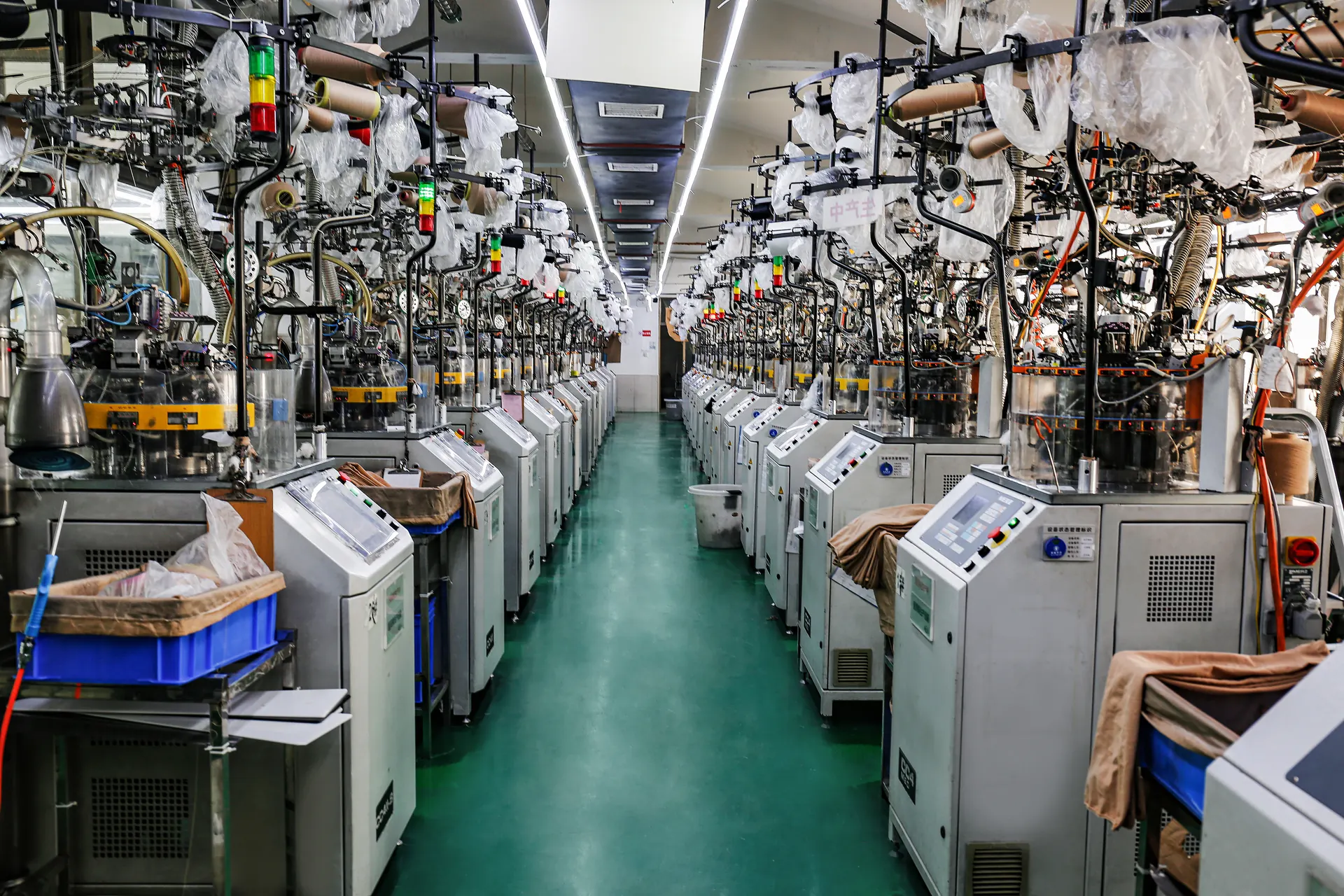
What manufacturing equipment do you use?
Our production setup includes dedicated compression and general hosiery equipment, supported by linking, boarding, inspection and testing processes. Machine selection follows the required construction and gauge.
What are the main stages of bulk production?
After specification and sample approval, the process typically covers material preparation, knitting, linking or sewing, boarding or finishing, in-process checks, final inspection and packing. Steps are adjusted to the product construction.
Can a pre-shipment inspection be arranged?
Yes. Inspection scope, sampling level, acceptance criteria, timing and whether it is performed by the buyer, a third party or our team should be agreed before production and recorded in the order requirements.
05
Production and delivery
Lead times, logistics and the process for resolving quality concerns.
What is the typical production lead time?
Lead time depends on sample approval, yarn availability, construction, order volume and packaging. We provide a project schedule after all specifications are confirmed.
Which shipping options are available?
Orders can be coordinated by courier, air, rail or sea depending on volume, destination and urgency. The agreed Incoterm, packing data and forwarder arrangement are confirmed before dispatch.
How are quality concerns handled after delivery?
Please provide order details, quantities, photos or video and relevant inspection records. We review the evidence against the approved specification and agree appropriate corrective action based on the findings.
Can an order be changed after confirmation?
Change requests are reviewed against material purchasing, production status, packaging and shipping bookings. Feasibility, additional cost and schedule impact must be confirmed in writing before any change takes effect.
What after-sales support is available?
We support order traceability, document review and investigation of reported issues. Any remedy depends on timely evidence, the approved specification, inspection findings and agreed commercial terms; outcomes are assessed case by case.
QUALIFICATION REVIEW
Documentation matched to the product and destination market
Available quality-system, facility, material and test documents are reviewed during project qualification; scope and applicability are confirmed before order placement.
- ISO 13485 documentation review
- FDA-related status review
- BSCI facility documentation
- OEKO-TEX material documentation
- Product-specific inspection